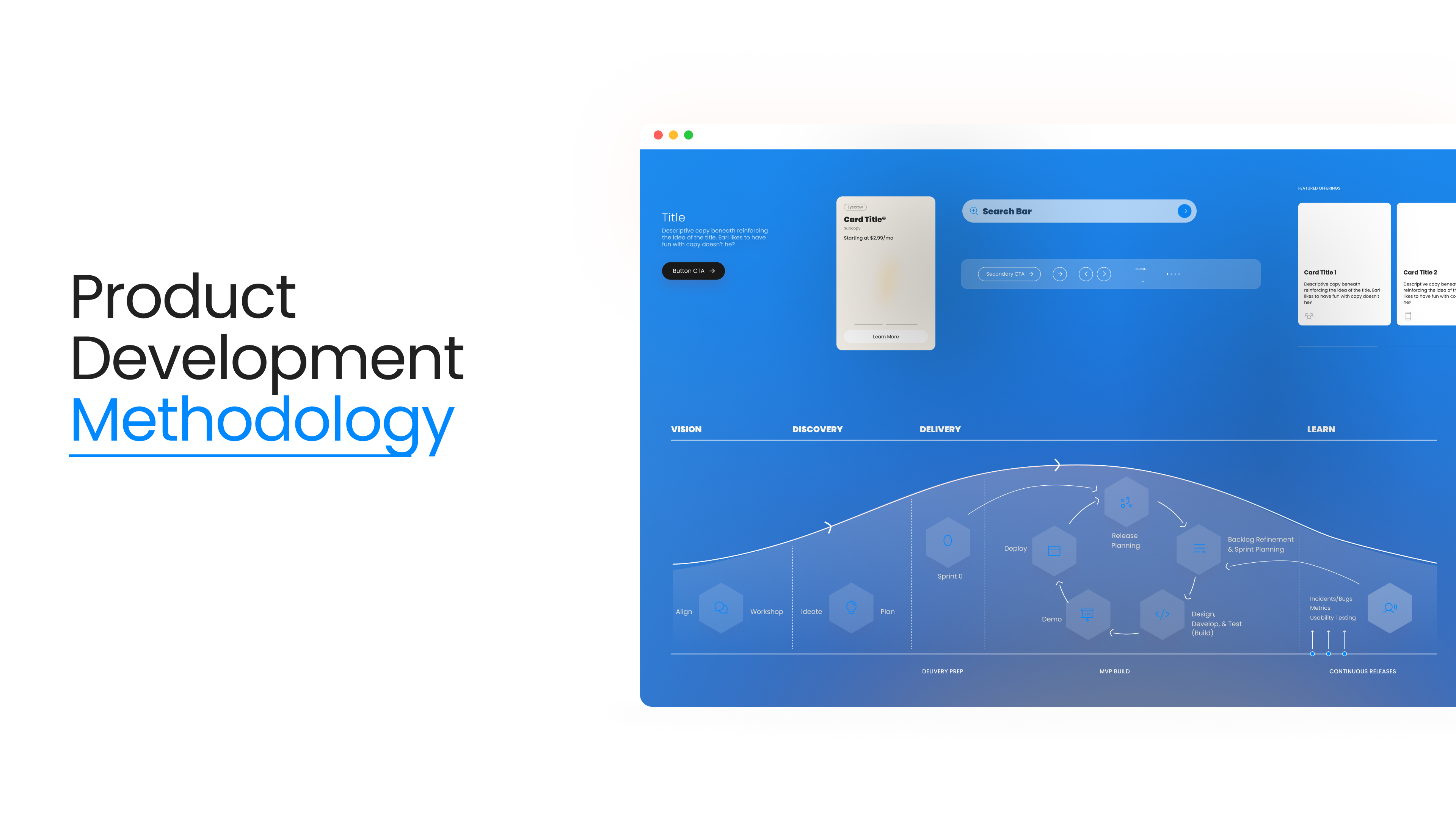
Quick Explanation of Process & Team Management

This Product Development Methodology (PDM) follows a continuous cycle from Vision through Discovery and Delivery to Learn, where initial alignment and ideation flow into delivery prep (Sprint 0), MVP builds with iterative design/development/testing, and deployment with release planning. The Learn phase feeds back into Discovery through backlog refinement and sprint planning, creating a closed loop where insights from incidents, bugs, metrics, and usability testing inform the next iteration. This continuous improvement cycle ensures customer gaps are surfaced through both evaluative and generative research and metrics, which then drive better outcomes in subsequent sprints rather than just pushing more releases.

I build team culture by centering everything on Focus on the Human—ensuring we’re solving real problems for real people, not just shipping features. I foster Drive Collaboration and Trust the Process by creating psychological safety where diverse perspectives are valued and proven methods guide us, so the team feels confident exploring ideas openly. Through Commitment to Craft and Iterate Rapidly, I encourage pride in our work while embracing a learning mindset where it’s safe to share early, fail fast, and improve together. Ultimately, I help the team see how Prioritizing Outcomes over outputs means our success is measured by the impact we create, which gives everyone’s work deeper meaning and purpose.

An empathetic design leader establishes culture from day one by making new team members feel genuinely valued and set up for success—like creating thoughtful onboarding decks that welcome people warmly and provide clear navigation for their first days. This intentional care signals that people matter here, not just their output, and demonstrates the leader’s commitment to psychological safety and belonging. By investing time in helping newcomers understand the team structure, mission, and how they fit in, you’re modeling the collaborative, human-centered approach you want the entire team to embody. These early moments of care create a foundation of trust that ripples through everything the team does together.